Skip to Content

Category Archives: News En

Takata Airbag Recall Campaign: Mandatory Check for Vehicle Registration Procedures

Data non disponibile

-If the vehicle is affected by the recall, the procedure may not be completed until the airbag has been replaced.-

The Italian Ministry of Infrastructure and Transport has strengthened the measures relating to the Takata airbag recall campaign, which affects numerous vehicles from different manufacturers.

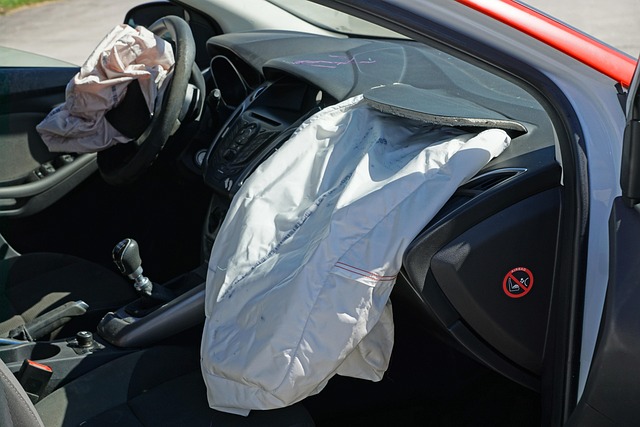
This is a particularly important safety campaign: some Takata airbags may deteriorate over time and, if deployed, could cause metal fragments to be projected into the passenger compartment, with serious or potentially fatal risks for the driver and passengers.

Mandatory check for vehicle registration procedures

MIT Directorate Decree no. 229 of 2 July 2026 introduced specific operational provisions to strengthen and complete the Takata airbag recall campaigns.

For this reason, when carrying out vehicle registration procedures, it is necessary to check whether the vehicle is affected by an outstanding Takata recall campaign.

The check is carried out using the Vehicle Identification Number, shown on the registration certificate or on the Single Vehicle Document under item E.

The VIN must be checked through the official portals made available by the Ministry, the manufacturers or the appointed entities.

What happens if the vehicle is affected

If the check shows that a Takata recall campaign is still pending, the procedure may be blocked or may not be completed until the vehicle has been made safe.

The decree provides that, for vehicles that have not yet undergone the repair intervention, a blocking flag may be entered in the National Vehicle Archive of the CED Motorizzazione. This blocking flag results in the suspension of Motorizzazione services until the manufacturer communicates that the functional restoration of the airbags has been completed.

In practice, before proceeding with the administrative procedure, the owner must contact the official network of the vehicle manufacturer to have the affected airbag replaced.

Airbag replacement is free of charge

The replacement of defective Takata airbags is free of charge for the user and must be carried out by the authorised network of the vehicle manufacturer.

At the end of the intervention, the authorised centre issues a document certifying that the component has been replaced.

This document may be necessary to prove that the vehicle has been made safe and to allow the completion of subsequent administrative procedures.

Pay attention also to transfers of ownership

The decree provides that operators of Vehicle Registration Agencies, Motorizzazione Offices and PRA Sections, when acting within their STA functions, must check whether a Takata airbag recall campaign applies to vehicles involved in transfers of ownership, as well as in cases of registration or importation into Italy.

In the event of a pending recall, the buyer or owner must be informed of the presence of the safety recall.

What the owner must do

The owner must:

  • retrieve the vehicle identification number;
  • check whether the vehicle is affected by the Takata campaign;
  • contact the official network of the vehicle manufacturer;
  • have the airbag replaced free of charge;
  • keep the documentation certifying that the intervention has been carried out.

Check your vehicle before starting the procedure

Before proceeding with transfers of ownership, registrations, imports or other vehicle registration procedures, Agenzia Arena carries out a preventive VIN check to verify the possible presence of outstanding Takata recall campaigns.

If the vehicle is affected and the intervention has not yet been carried out, the procedure may not be completed until the airbag has been replaced and the position has been updated by the vehicle manufacturer.

Do you need to start a vehicle registration procedure or would you like to check whether your vehicle is affected by the Takata recall?

Contact Agenzia Arena: we will help you check the vehicle’s status and understand which steps are required before proceeding.

0 Continue Reading →

REVE and IPT: What Changes from 25 May 2026

Data non disponibile

New provisions for foreign vehicles used in Italy

In brief

From 25 May 2026, REVE registration procedures are subject to the payment of IPT — the Provincial Transcription Tax — according to the rules provided for PRA procedures.

This change concerns the registration of foreign vehicles pursuant to Article 93-bis of the Italian Highway Code and introduces important operational consequences for individuals, companies and anyone using foreign-registered vehicles in Italy.

REVE: a registration increasingly similar to PRA procedures

REVE is the Register of Foreign Vehicles and applies to vehicles registered abroad and used in Italy by individuals or entities residing or established in Italy, in the cases provided for by law.

Under the new rules, REVE registration is no longer only an administrative requirement, but also has tax implications: REVE procedures are now subject to the Provincial Transcription Tax (IPT), with the rules set out by provincial regulations being applied.

In practice, in order to determine the amount due, it will be necessary to carefully check the vehicle’s technical data, the competent province and the documentation included in the digital file.

Which procedures are affected

The ACI-PRA circular of 25 May 2026 states that REVE procedures with codes P28701 and P28702, requested from 25/05/2026 onwards, are subject to IPT payment.

The tax must be calculated according to the general provisions of Article 56 of Legislative Decree no. 446/1997, as well as on the basis of the IPT regulation and the tariff resolutions of the competent Province.

Pay attention to the title and technical data

Another important aspect concerns the title to be submitted for REVE registration.

The circular clarifies that the title becomes an essential element of the procedure and must always be provided. This therefore supersedes previous instructions which, in some cases, allowed registration based only on the foreign registration certificate.

Furthermore, in order to correctly calculate the IPT, the vehicle’s technical data must be available from the documentation included in the digital file, in particular from the foreign registration certificate or from any technical certificates issued by the foreign authority.

If these certificates are in a foreign language, they must be accompanied by a sworn translation into Italian.

Rental companies: the reference province changes

The new rules also affect professional operators in the vehicle rental sector.

When the registered office differs from the office where the main ordinary management of the business is carried out, the IPT must be allocated to the Province where the latter office is located.

Pending further application clarifications, the circular provides that, for these companies, the main office must be indicated in the application both as the registered office and as the operating office, declaring the rental activity in the “other data” field.

Why rely on a vehicle registration agency

The new rules make REVE procedures more complex from a documentary, technical and tax perspective.

It is no longer sufficient to check only the foreign registration certificate: it is necessary to correctly verify the title, the vehicle’s technical data, the Province competent for IPT, any required translation of the documentation and the correct preparation of the digital file.

Relying on a specialised vehicle registration agency allows the procedure to be managed correctly from the start, helping to avoid suspensions, calculation errors or requests for additional documentation.

Conclusion

From 25 May 2026, REVE registration requires greater attention: the introduction of IPT involves new checks and more accurate document management.

For individuals, companies and industry operators, it is therefore important to assess each specific case in advance and prepare a complete, correct application that complies with the new provisions.

0 Continue Reading →

Electric Scooters: What Changes in 2026 – Identification Mark, Insurance and New Operational Rules

Data non disponibile

From 2026, new obligations will come into force for electric scooters:

  • Mandatory identification mark from 17 May 2026
  • Mandatory third-party liability insurance from 16 July 2026
  • Helmet already mandatory

The new rules aim to make electric scooters safer and, above all, identifiable, bringing them increasingly closer to other vehicles circulating on the road.

The rules today: where they can circulate and what they must comply with

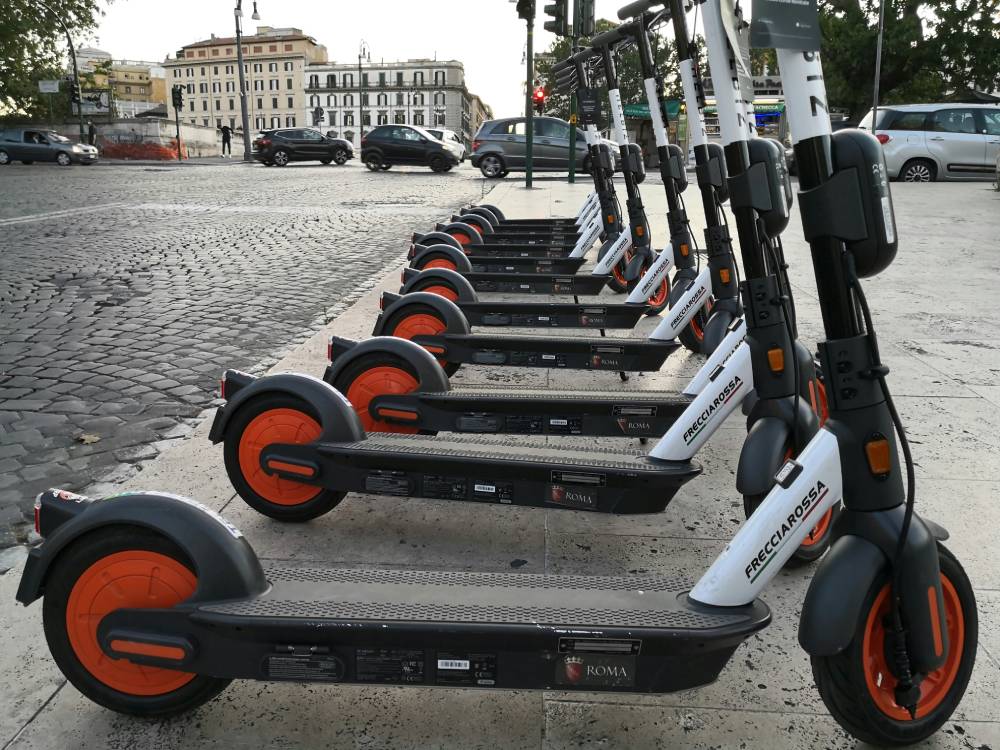
Electric scooters are now part of everyday urban mobility, but they cannot be used freely everywhere.

Their circulation is allowed in urban areas, in compliance with the applicable limits and local road signs. It is not permitted to ride on pavements, nor to use the scooter in a dangerous manner or in a way that does not comply with road traffic rules.

The technical requirements of the vehicle and compliance with speed limits also remain essential: 20 km/h as the general limit and 6 km/h in pedestrian areas, where circulation is allowed.

With the most recent changes, the regulatory framework has also introduced the obligation for riders to wear a helmet and further requirements for owners, including the identification mark and third-party liability insurance.

The new approach: an identifiable, traceable and insured scooter

The real change is a shift in perspective: the electric scooter is no longer considered merely a light and occasional means of transport for short journeys, but a vehicle that circulates on the road and must therefore be identifiable and insured.

From 17 May 2026, it becomes mandatory for electric scooters to be fitted with an identification mark. From that date, circulating without an identification mark will constitute a punishable violation.

From 16 July 2026, insurance companies will have to offer third-party liability policies for electric scooters, with the full operation of the insurance obligation being linked to the possibility of uniquely identifying the vehicle.

In practice, the scooter must first be identified through the identification mark, and only then can it be correctly insured.

The identification mark: the first step

From 17 May 2026, every electric scooter must be fitted with an identification mark.

This is a fundamental element because it:

  • allows the vehicle to be identified
  • links the vehicle to its owner
  • makes it possible to correctly activate insurance coverage

Without an identification mark, circulation on the road becomes irregular and subject to penalties.

Insurance: when the obligation actually starts

The obligation to have third-party liability insurance does not start immediately, but from 16 July 2026.

This is because the policy must be linked to an identifiable vehicle.

Only once the identification mark system is active will it be possible to correctly associate the electric scooter with insurance coverage.

Pay attention to the deadlines

The two dates to keep in mind are therefore:

  • 17 May 2026 → identification mark obligation
  • 16 July 2026 → insurance obligation

From the first deadline, penalties apply to those circulating without identification, while from the second deadline insurance coverage also becomes mandatory.

What the owner must do

To comply with the rules, it will be necessary to:

  • request the identification mark
  • apply it correctly to the vehicle
  • activate a third-party liability insurance policy
  • comply with traffic rules, including the helmet requirement

Why rely on a vehicle registration agency

The introduction of these obligations means that many users will need to manage new administrative procedures, which may not always be straightforward.

Relying on a vehicle registration agency allows you to:

  • avoid errors when requesting the identification mark
  • receive support in managing the documentation
  • correctly understand deadlines and regulatory obligations
  • reduce delays and uncertainties related to the procedures

In an evolving regulatory context, the support of a specialised operator provides a guarantee that you can comply with the rules promptly and circulate without risks.

Operational advice

Given the novelty of the rules and the large number of users involved, it is advisable to act in good time.

We are already seeing an increase in requests, with slowdowns in the procedures.

Taking action immediately means avoiding penalties and circulating in a compliant and safe manner.

0 Continue Reading →